
Washable vs Disposable: Environmental Choices in Continence Care
One in four Australians experiences incontinence and makes millions of disposal decisions daily. So, every time you reach for a pad or put on protective underwear, you’re making a choice that affects both your wallet and the planet.
At OntexHealthcare, we provide both disposable and reusable continence solutions across our iD, Lille, and Kylie brands, so we understand how these choices impact your daily life.
In Australia, disposable pads generate significant landfill waste, contributing to the billions of incontinence products discarded yearly in other countries. Reusable options, in comparison, save money long-term but need regular washing and care.
Your choice depends on leak severity, lifestyle, budget, and environmental priorities. So let’s look at how these two options compare.
What’s the Environmental and Financial Difference Between Washable and Disposable Products?
Washable incontinence pads reduce landfill waste and save $800 yearly compared to disposables. But there’s more to them than just savings and environmental claims.

Landfill waste vs. water usage
Which do you think harms the environment more: plastic filling landfills or extra loads of laundry? Of course it’s plastic!
And those disposable pads (primarily made of plastic) can take 500 years to decompose in Australian landfills. Your great-great-grandchildren will still be dealing with products you threw away today.
Now, while reusable incontinence underwear is better, they do require extra water and energy for regular washing cycles. Every wash uses water, electricity, and detergent.
Modern washing machines, however, use far less water than older models, which helps. But if you’re washing small loads frequently instead of waiting for full loads, that impact grows.
That being said, each reusable item prevents hundreds of disposables from reaching landfill sites. One pair of washable underwear that lasts 200 washes replaces 200 disposable products.
Manufacturing footprints compared
The best part about understanding manufacturing impacts is making informed environmental choices.
Disposable: Making disposable pads uses a lot of raw materials and adds significantly to carbon emissions. These single-use products are produced continuously in factories, yet they are thrown away within hours. Much of their environmental impact comes from the plastic parts, which rely on petroleum-based materials.
Reusables: These pads are usually made from cotton or bamboo, which come from renewable sources and naturally break down at the end of their life. Over time, they create far less waste and are easier on the planet.
Neither is perfect. So it’s up to you to decide which trade-off makes more sense for you.
Upfront costs vs. long-term savings
Can spending more up front actually save you hundreds of dollars each year? The math says yes.
Quality washable pants cost $20-30 each when you first buy them. You’ll need at least six pairs for a proper rotation. That’s $120-180 upfront.
But disposable pads will cost you $80-200 monthly for moderate leak management in Australia. At $80 monthly, you’re spending nearly $1,000 yearly!
With reusables, you’ll go through 50 to 300 washes before needing replacements.
Monthly spending breakdown
Your monthly spending can help you determine the cost difference between these two options.
Disposable: Most people spend over $700 yearly on disposable pads for bladder leaks. That’s using roughly two pads daily. If you need more absorbent products, those numbers climb to $1,500 or more annually.
Reusables: Six reusable items ($120-180) cover your daily rotation and washing schedule. That means you can save around $800 annually by switching to reusables. And once your initial investment pays itself back in 2-3 months, everything after that is money staying in your pocket.
Which Option Suits Your Lifestyle and Incontinence Needs Best?
Now that you know the environmental and cost differences, let’s match products to your needs. The right choice will depend on how much you leak, where you spend your time, and what’s valuable to you.
Light to moderate leaks
We (and our customers) love reusable underwear for managing leaks while looking like regular underwear.
They handle light bladder leaks and occasional accidents very well. For instance, most reusables absorb 100-200 ml per wear for daytime protection needs. That’s roughly the amount in a small cup of tea.
So, if you’re dealing with small leaks when you cough, sneeze, or laugh, reusables are a great choice.
Heavy incontinence and skin health
Our preferred choice for heavy leaks is usually disposable briefs. Compared to reusables, these will give you higher absorbency (up to 500-1,000 ml) and can handle full voids or frequent large leaks.
But if you’re experiencing skin irritation or rashes, switch to reusables. Their natural fabrics, like cotton and bamboo, breathe better than plastic-backed disposables and let air circulate around your skin.
Some people actually develop rashes from the chemicals and plastics in disposable products, especially when they’re worn for long periods.
We don’t recommend wearing either of them for longer than 8 hours.
Home routines vs. travel situations
Where you spend most of your time determines which product will work best for you.
At home, washable bed pads and underwear are the easiest to use. You can wash them and have fresh ones available whenever you need.
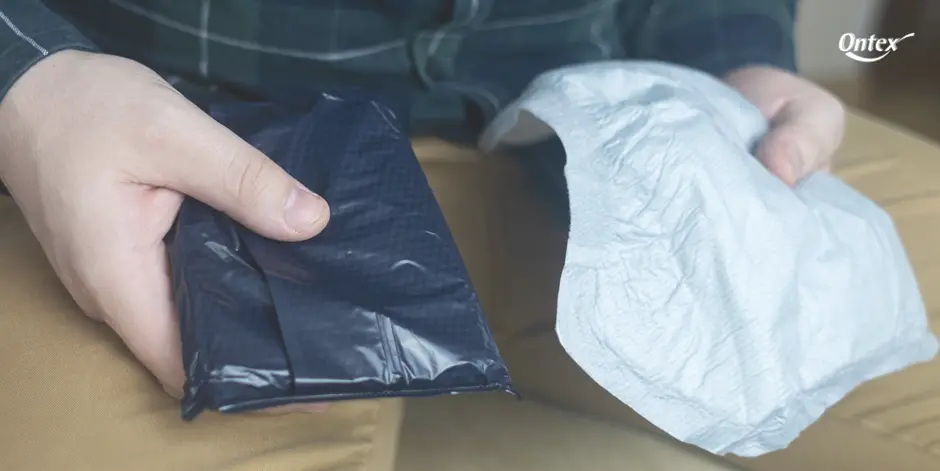
If you’re looking for convenience during travel or long days away from home, disposables are a great choice. On a road trip or at work, you won’t be near a washing machine (…unless there’s a laundromat nearby), and carrying soiled reusables isn’t practical.
Combining both washable and disposable strategically
You can always use both options and switch depending on what works best for convenience and the environment. We often see customers use reusables at home to reduce waste and keep disposables handy for outings.
Make the Right Choice for You and the Planet
Your choice between washable and disposable products influences both your wallet and the environment.
But as you can tell, neither choice is perfect for the planet. Disposables add long-lasting landfill waste, and washables use water and energy with each wash. Both have trade-offs. So choose the option that fits your leak severity, budget, and daily routine.
Need help finding the right product for your needs? Browse our full range at Ontex Healthcare today.
Also read-5 Technologies Extending the Life of Modern Glass Materials